

—

Prepared by
Moamer Al-Sulaiman
Researcher in Political and Strategic Affairs
Kingdom of Saudi Arabia
—
**Introduction**
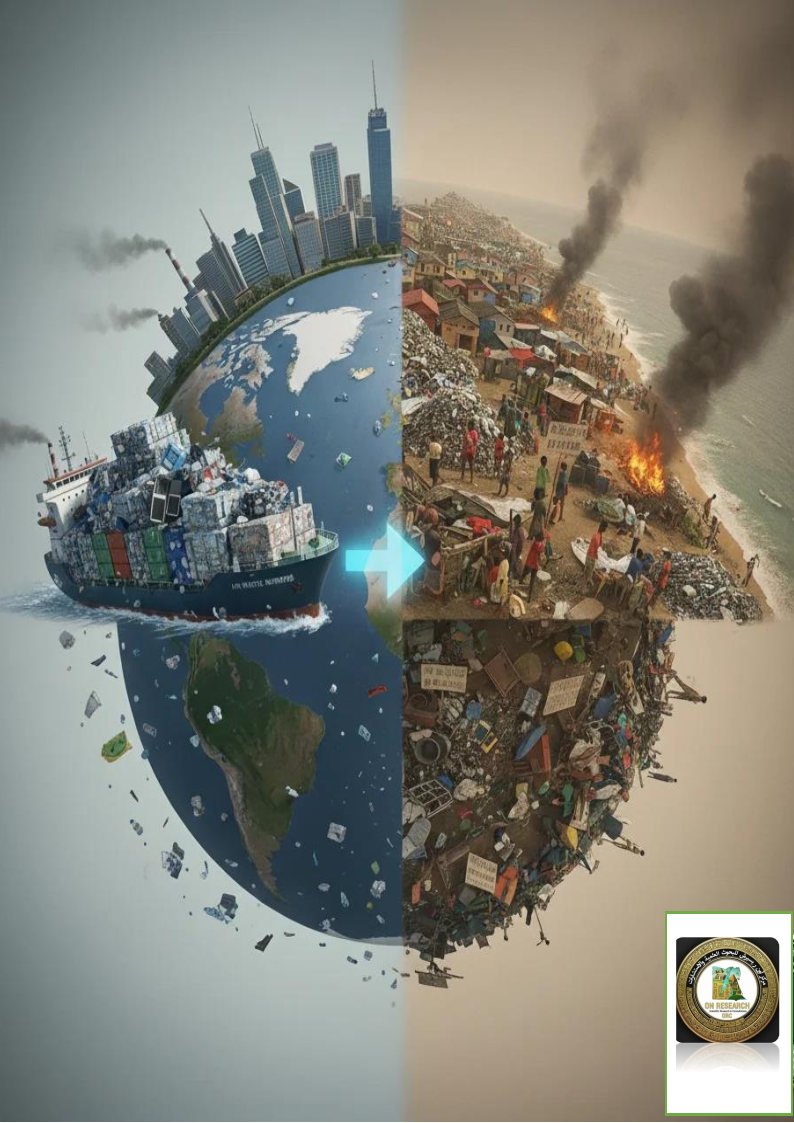
In recent years, there has been an unprecedented increase in global debates regarding plastic waste, especially after recent reports—most notably by *The Guardian* and the *The Last Beach Cleanup* group—revealed that Britain’s exports of plastic waste to developing countries increased by 84% within a single year, reaching record-breaking levels. These alarming figures raise serious questions about the true causes and motives behind this worrying rise, as well as its environmental, economic, and ethical impacts, within a global trade system that allows environmental crises to be shifted from the wealthy Global North to the poorer Global South.
—
**1. Background of the Phenomenon**
The United Kingdom is one of the largest producers of plastic waste in Europe, generating over 2.5 million tons annually—an average of more than 36 kilograms per person. However, the UK’s recycling infrastructure suffers from chronic shortcomings that cannot keep pace with this huge volume of waste, with local processing capacity covering only about 40% of total plastic waste produced. This forces companies and factories to export a large portion of the waste abroad under the pretext of “recycling.”
China’s 2018 ban on foreign waste imports, as part of its “National Sword” policy to protect the environment, marked a turning point. The trade routes of plastic waste sharply shifted toward Southeast Asian countries such as Indonesia, Malaysia, and Vietnam, as well as some African nations like Ghana and Nigeria, which became new destinations for waste from developed countries.
—
**2. Economic and Political Reasons**
**1. Low cost and high profitability:**
One main reason is that exporting waste to developing countries is far cheaper than processing it domestically in Britain. Processing one ton of plastic locally may cost £300–£500, whereas exporting and processing it abroad costs no more than £150 per ton, saving companies millions of pounds annually.
**2. Strict domestic regulations and legal loopholes:**
European and British environmental laws impose high recycling standards and strict landfill controls, prompting companies to seek legal loopholes by exporting waste labeled as “recyclable materials,” exploiting gaps in the Basel Convention regulating the trade of hazardous waste.
**3. Weak oversight in importing countries and corruption issues:**
Many developing countries lack strict regulatory systems for waste imports, and administrative corruption facilitates the entry of waste shipments under the guise of “recyclable raw materials,” making them easy destinations for dumping plastics without proper treatment.
**4. Trade pressures following Brexit:**
Britain’s exit from the EU opened the door to new trade agreements, with environmental exports becoming part of negotiations with developing countries to compensate for economic losses resulting from Brexit.
—
**3. Environmental and Human Dimensions**
These practices lead to multiple disasters, including:
* **Widespread environmental pollution:** Waste is often burned or buried in open areas, releasing toxic gases and contaminating air and groundwater. According to UN Environment Programme estimates, 90% of exported plastic waste is not actually recycled.
* **Severe health impacts:** Local populations are exposed to toxic leaks into soil and water, causing respiratory and cancer-related diseases. In Malaysia and Indonesia, respiratory illnesses near waste-burning sites increased by 40%.
* **Undermining environmental justice:** Poor countries bear the burden of rich countries’ waste in a stark example of environmental inequality, making disadvantaged communities pay the price for the consumption habits of wealthier societies.
—
**4. Ethical and Diplomatic Dimension**
This phenomenon reveals a new form of environmental colonialism, where developed countries export their environmental crises to the Global South, ignoring the principle of common but differentiated responsibility. It also generates increasing diplomatic tensions between some European countries and importing nations, which have begun rejecting waste shipments, as happened when Malaysia returned 42 containers to Britain and Indonesia returned 547 containers to exporting countries.
—
**5. Possible Solutions**
* **Restructuring recycling policies:** Invest £500 million in domestic recycling infrastructure and impose taxes on single-use plastics.
* **Strict international restrictions:** Implement the 2021 revised Basel Convention, imposing tighter controls on the trade of plastic waste and creating an international regulatory system for maritime transport of waste.
* **Supporting developing countries:** Establish $100 million funding programs to build their waste management capacity and transfer clean technologies.
* **Promoting a circular economy:** Provide tax incentives to companies adopting reuse-based production models, reduce overall production, and lower VAT on locally recycled products.
* **Enhancing oversight and transparency:** Create an electronic tracking system for plastic shipments and require exporting companies to publish periodic reports detailing the destination and fate of the waste.
—
**Conclusion**
The 84% increase in Britain’s plastic waste exports is not merely an environmental statistic; it reflects a deep imbalance in global environmental justice, exploiting the weak economic infrastructure of developing countries to relieve the burden of richer nations. Addressing this critical issue requires genuine international cooperation, a radical rethinking of economic value systems that prioritize short-term profit over planetary and human health, and the fair implementation of the “polluter pays” principle. Environmental harm knows no geographical boundaries; damage to any part of the planet will eventually affect everyone.
—
**Sources:**
* *The Guardian* (2025)
* *The Last Beach Cleanup* report (2025)
* Organisation for Economic Co-operation and Development (OECD)
* United Nations Environment Programme (UNEP)
* UK Department for Environment, Food & Rural Affairs (DEFRA)
* Global Alliance for Incinerator Alternatives (GAIA)


