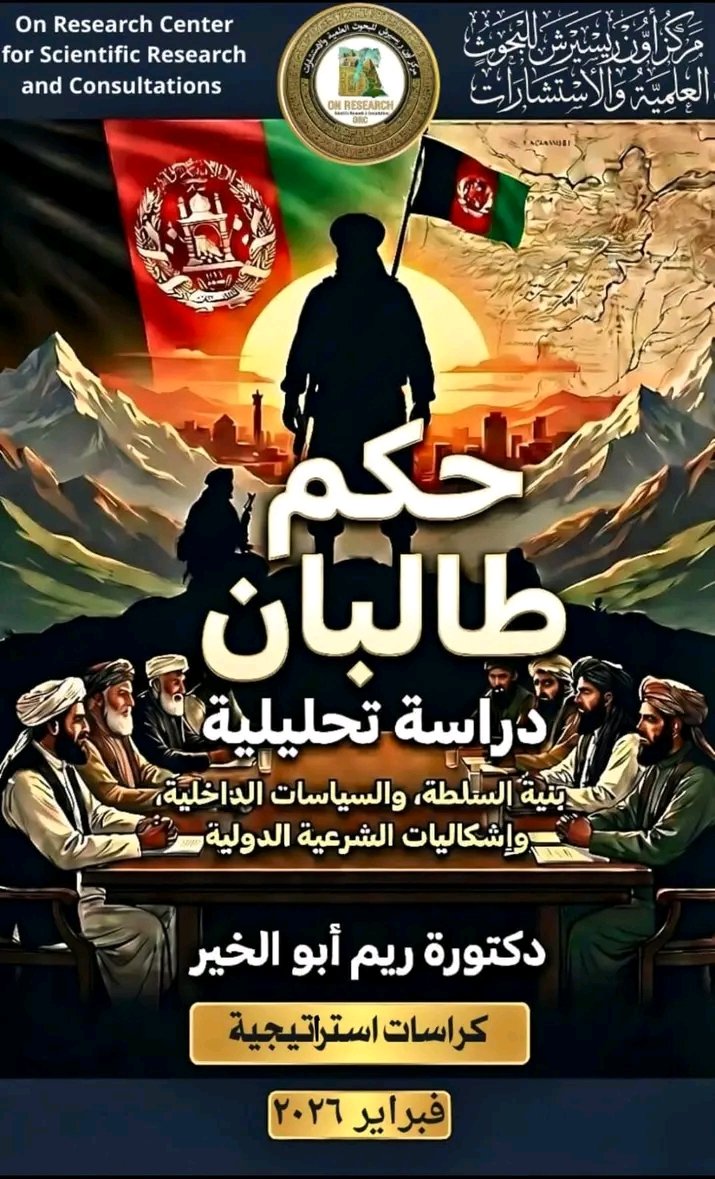
كراسة استراتيجية
حكم طالبان : دراسة تحليلية (بنية السلطة، والسياسات الداخلية،وإشكاليات الشرعية الدولية)
إعداد
د ريم أبو الخير
إعلامية وأكاديمية
متخصصة فى الشأن الإيرانى والأفغاني
جمهورية مصر العربية
الملخص :
تتناول هذه الدراسة عودة حركة طالبان إلى الحكم في أفغانستان عقب سيطرتها على العاصمة كابل في أغسطس 2021، في أعقاب الانسحاب الأمريكي والدولي الذي أنهى عقدين من الوجود العسكري الأجنبي. وتسعى إلى تقييم تجربة طالبان في الحكم بعد مرور أربع سنوات، من خلال تحليل طبيعة النظام السياسي الذي أرساه قادتها، وآليات تثبيت السلطة، ومدى قدرتها على إدارة الدولة في ظل عزلة دولية وضغوط داخلية متراكمة.
تركز الدراسة على التحولات الأمنية التي شهدتها أفغانستان، حيث نجحت طالبان في إنهاء حالة الحرب المفتوحة وفرض مستوى من الاستقرار الأمني النسبي، مقابل استمرار تهديدات الجماعات المتطرفة، وعلى رأسها تنظيم داعش – ولاية خراسان. كما يناقش الأوضاع الاقتصادية المتدهورة الناتجة عن تجميد الأصول ووقف المساعدات الدولية، وتأثير ذلك على مستويات المعيشة، وانتشار الفقر والبطالة، واعتماد السكان على المساعدات الإنسانية.
وتتناول الدراسة كذلك ملف حقوق الإنسان باعتباره أحد أبرز عوامل الخلاف بين طالبان والمجتمع الدولي، مع التركيز على القيود المفروضة على المرأة، خاصة في مجالي التعليم والعمل، وانعكاسات هذه السياسات على النسيج الاجتماعي ومستقبل التنمية البشرية في البلاد. كما يستعرض طبيعة السياسة الخارجية لطالبان، التي اتسمت بالبراجماتية الحذرة وبناء علاقات عملية غير رسمية مع عدد من القوى الإقليمية، في مقابل استمرار غياب الاعتراف الدولي الرسمي.
وتخلص الدراسة إلى أن تجربة طالبان بعد أربع سنوات كشفت عن مفارقة أساسية بين نجاحها في فرض السيطرة الأمنية والإدارية، وعجزها عن تحقيق استقرار اقتصادي شامل أو شرعية دولية، مما يجعل مستقبل حكمها مرهونًا بمدى قدرتها على التكيف مع متطلبات الحكم الحديثة والاستجابة لمطالب الداخل وضغوط الخارج.
الكلمات المفتاحية: حركة طالبان – أفغانستان – الأزمة الاقتصادية – المساعدات الإنسانية -حقوق الإنسان _ المرأة والتعليم _ الاعتراف الدولي.
Abstract:
This report analyzes the return of the Taliban to power in Afghanistan following their takeover of Kabul in August 2021, after the withdrawal of U.S. and international forces that ended nearly two decades of foreign military presence. The report aims to assess the Taliban’s governance experience four years after regaining power by examining the nature of the political system they established, the mechanisms used to consolidate authority, and their ability to govern the country amid international isolation and mounting internal pressures.
The report highlights the security transformations in Afghanistan, noting that the Taliban succeeded in ending large-scale armed conflict and imposing a degree of relative security, while continuing to face serious challenges from extremist groups, particularly ISIS–K (Islamic State Khorasan Province). It also examines the severe economic deterioration caused by the freezing of Afghan assets and the suspension of international aid, and the resulting impact on living conditions, widespread poverty, unemployment, and growing dependence on humanitarian assistance.
Furthermore, the report addresses human rights as one of the most contentious issues shaping relations between the Taliban and the international community, with a particular focus on restrictions imposed on women’s education and employment and the long-term implications of these policies for Afghanistan’s social fabric and human development. The report also explores the Taliban’s foreign policy approach, characterized by cautious pragmatism and the pursuit of informal working relations with regional powers, alongside the continued absence of formal international recognition.
The report concludes that four years of Taliban rule reveal a fundamental paradox: while the movement has succeeded in consolidating security and administrative control, it has failed to achieve sustainable economic stability or international legitimacy. Consequently, the future of Taliban governance remains closely tied to its capacity to adapt to modern governance requirements and to respond effectively to both domestic demands and external pressures.
Keywords: Taliban Movement, Afghanistan, Economic Crisis, Humanitarian Aid, Human Rights, Women and Education, International Recognition.
لتحميل الكراسة بصيغة pdf اضغط الرابط أسفل
حكم طالبان ( بنية السلطة ، والسياسات الداخلية، واشكاليات الشرعية الدولية )..


