
Prepared by
Arshad Mehmood
A conflict zone journalist
Associated with a prestigious American news agency, The Media Line USA
Islamabad
More than 100 Afghan human rights advocates and women’s rights defenders have addressed an open letter to Melania Trump, the First Lady of the United States, urging her to use her platform and influence to draw renewed global attention to the worsening plight of women and girls in Afghanistan under Taliban rule.
The appeal reflects a growing sense of urgency among Afghan activists who fear that their struggle is fading from international focus amid competing global crises. According to the letter, Afghan girls who once dreamed of becoming doctors, teachers, and journalists are now effectively shut out of their futures.
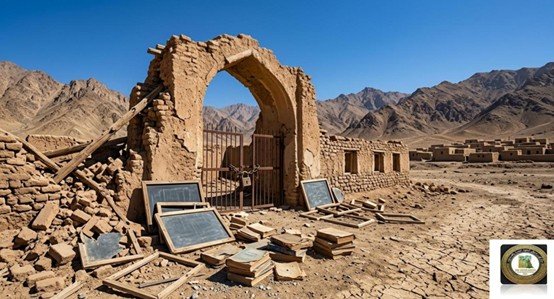
Education beyond the primary level remains banned for girls, while women face sweeping restrictions that exclude them from most forms of employment, public life, and even basic freedom of movement. The signatories describe a system that has systematically erased women from the social and economic fabric of the country.
The initiative is led by Sadiq Amini, Founder of the Afghanistan Impact Network in the United States, and Tehmina Safi, Co-Founder of the same network in France. Both are well-known Afghan rights advocates who have been actively working to amplify the voices of Afghan women on international platforms. Their letter has garnered support from more than 100 signatories worldwide, including activists, human rights defenders, and members of grassroots protest movements both inside Afghanistan and in the diaspora.
Beyond restrictions on rights and freedoms, the letter also highlights the deepening humanitarian crisis. Many Afghan families are grappling with severe economic hardship, widespread hunger, deteriorating health conditions, and limited access to medical care. These challenges, compounded by restrictions on women, have created a multidimensional crisis that disproportionately affects women and children.
The signatories say they are particularly encouraged by Melania Trump’s previous advocacy for children affected by conflict, and believe she is in a unique position to bring global attention back to Afghanistan. In her address to the United Nations Security Council on March 2, 2026, the First Lady emphasized the importance of education in building lasting peace.
“Peace does not need to be fragile. Enduring peace will be achieved when knowledge and understanding are fully valued within all of our societies,” she said. She further noted that “conflict arises from ignorance, but knowledge creates understanding, replacing fear with peace and unity,” urging global leaders to invest in education as a pathway to long-term stability.
While Afghanistan was not explicitly mentioned in her remarks, the broader theme of the meeting—focused on the global crisis of girls denied education in conflict zones—closely mirrors the situation faced by Afghan girls today. Other participants at the session, including UN Under-Secretary-General Rosemary DiCarlo, did directly reference Afghanistan, noting that approximately 2.2 million Afghan girls remain excluded from secondary education. She also highlighted ongoing UN efforts to reach these girls through alternative means such as digital and radio-based learning programs.
In their letter, the Afghan advocates call for stronger and more visible public support from influential global figures, including the First Lady. They urge the expansion of education initiatives, including informal and underground schooling networks that have emerged as a lifeline for many girls. Additionally, they call for sustained international pressure on the Taliban to reverse policies that restrict women’s rights and access to education.
The appeal is also shaped by the precarious situation faced by many Afghan activists living in exile, particularly in neighboring countries like Pakistan, where fears of deportation remain high. Despite these risks, activists continue to organize, advocate, and speak out against the restrictions imposed by the Taliban regime.
Since the Taliban’s return to power in August 2021, restrictions on women and girls have steadily intensified. Girls are barred from secondary and higher education, women are largely excluded from the workforce, and strict dress codes and male guardian requirements have been enforced. At the same time, economic decline and limited humanitarian access have deepened the overall crisis, leaving millions vulnerable.
Yet, despite these immense challenges, Afghan women continue to resist. From organizing protests to running underground schools and engaging in international advocacy, they remain determined to fight for their rights and their future. The letter to Melania Trump is part of a broader effort to ensure that their voices are not silenced or forgotten.
In conclusion, the appeal underscores a critical moment for international engagement on Afghanistan. By reaching out to a prominent global figure, Afghan advocates are seeking not only symbolic support but tangible action that could help restore access to education, work, and basic freedoms. Their message is clear: even limited attention and advocacy at the highest levels can make a meaningful difference in keeping hope alive for millions of Afghan women and girls.


