

Prepared by
Sara El-Gendy
Political Science Researcher
Bachelor’s degree in Political Science, Cairo University
Egypt
Abstract:
This article examines Tanzania’s experience in building a nation-state in the aftermath of colonial rule. It analyzes how colonial administrative, economic, and social legacies shaped identity formation and posed challenges to post-independence cohesion. Focusing on successive political phases since 1961, the study explores the policies adopted to transform ethnic and cultural diversity into social integration and political stability. Special attention is given to Julius Nyerere’s Ujamaa ideology, language policy, institutional reforms, and later economic and political liberalization. The paper argues that Tanzania represents a relatively successful model of nation-building in postcolonial Africa, having avoided large-scale ethnic conflict while pursuing national unity, development, and state consolidation. At the same time, persistent economic vulnerabilities and political dominance by a single party continue to shape the trajectory of the Tanzanian nation-state.
Keywords: Tanzania, Nation-Building, Postcolonial State, Ujamaa, National Identity, Africa, Political Development.
Introduction
Africa, the second largest continent in the world by area, formally fell under European colonial domination from the early nineteenth century onward. Colonial powers systematically exploited the continent’s rich natural resources and human capital. In their pursuit of economic, political, and strategic interests, competing European states convened conferences to divide Africa among themselves, most notably the Berlin Conference (1884–1885), which partitioned the continent and imposed arbitrary borders without regard for African peoples or their ethnic and cultural diversity. This division introduced alien political and economic systems, which had profound social and cultural consequences.
One of the most significant legacies of colonialism was the nation-state model. This political and social entity combines sovereignty and self-reliance with the concept of a unified nation. Beyond economic and political objectives, the nation-state assumes a degree of cultural and social homogeneity based on shared language, religion, history, and traditions, fostering a sense of belonging and national identity.[1]
On the eastern coast of Africa along the Indian Ocean, Tanganyika, the mainland part of present-day Tanzania, came under German colonial administration after the Berlin Conference and later under British mandate following Germany’s defeat in World War I, gaining independence in 1961. Zanzibar, the island component, had been a British protectorate since the late nineteenth century and achieved independence in 1963. In 1964, the two entities united to form the United Republic of Tanzania.
Tanzania, like many African states, is characterized by both economic resources and cultural pluralism. It contains more than 126 ethnic groups across coastal and inland regions, including Arab and African elements. The majority of the population is Muslim, while others adhere to Christianity. Unlike many neighboring countries, Tanzania is often cited as a success story in nation-building, having established a relatively cohesive society despite cultural heterogeneity. Against this background, this study examines Tanzania’s efforts at nation-state construction in the post-colonial era, highlighting both achievements and challenges.
Theoretical Framework
This study is grounded in key theories of nation-building and nationalism. According to Benedict Anderson’s concept of “Imagined Communities”, nations are socially constructed through shared narratives, language, and institutions[2]. Additionally, Ernest Gellner argues that nationalism emerges as a product of modernization and requires cultural homogeneity supported by state institutions.[3]
From a political development perspective, nation-building is understood as a process of creating a unified political identity within a territorially defined state (Fukuyama, 2014). These theoretical perspectives provide a framework to analyze how Tanzania managed ethnic diversity through language policy, socialist ideology, and institutional reforms.
Methodology
This research adopts a qualitative analytical approach based on historical institutionalism. It relies on secondary data sources, including academic books, journal articles, and policy reports. The study also incorporates comparative insights and limited quantitative indicators (e.g., literacy rates, GDP growth) to support the analysis of Tanzania’s development trajectory.
First: Tanzania’s Historical Context During Colonialism
Before European colonization, the territory of present-day Tanzania consisted of diverse tribal and ethnic communities organized into kingdoms, emirates, and chiefdoms. Prominent among these were the Zanzibar Sultanate and the Sukuma and Chagga polities. These societies relied primarily on agriculture, fishing, and pastoralism, and were linked to the Arabian Peninsula and India through coastal trade networks. Zanzibar, under Omani rule, flourished as a commercial hub for spices, ivory, and slaves. During the sixteenth and early seventeenth centuries, Zanzibar was under Portuguese domination until it was reasserted by the Omani Sultanate in the early eighteenth century. It subsequently became a British protectorate in the late nineteenth century and achieved independence in 1963.[4]
With the European scramble for Africa, Tanganyika experienced two successive colonial phases: German rule (1885–1919) and British rule (1919–1961). In the late nineteenth century, Tanganyika came under the control of the German Empire in the aftermath of the Berlin Conference (1884–1885), which partitioned Africa among the European powers. German administration imposed centralized authority and promoted plantation agriculture, such as coffee, sisal, and cotton, confiscating land from local populations. The administration was highly centralized, with both legislative and executive authority concentrated in the hands of the governor. Harsh laws and coercive practices triggered resistance, most notably the Maji-Maji Rebellion (1905–1907), which, despite suppression, contributed to the emergence of national consciousness.[5]
Following Germany’s defeat in World War I, Tanganyika was placed under British administration under the League of Nations mandate system and later the United Nations trusteeship system. British colonial rule adopted a policy of indirect governance, whereby traditional leaders were used to administer rural areas under the authority of the colonial power. This approach reinforced tribal distinctions and inequalities, while British policy focused on expanding export-oriented agriculture without corresponding investment in basic social services such as education and healthcare.[6]
In 1961, Tanganyika gained independence under the leadership of Julius Nyerere and the Tanganyika African National Union (TANU), which later merged with the Afro-Shirazi Party (ASP) to form Chama Cha Mapinduzi (CCM), becoming the dominant political force in the country. In April 1964, the United Republic of Tanganyika and Zanzibar was established and was officially renamed the United Republic of Tanzania on 29 October of the same year.[7]
These diverse colonial policies complicated identity formation in Tanzania through administrative, economic, and social structures. Racial discrimination was directed not only against Tanzanians as a whole, ranked below Europeans and Asians, but also manifested between African populations and Arab Muslim communities, thereby intensifying political tensions, social divisions, and tribal fragmentation. The colonial economic system, centered on plantation agriculture, generated regional imbalances between cash-crop production and pastoral livelihoods. Urban centers were favored over rural areas, producing sharp inequalities between rich and poor, weak infrastructure, and inadequate social services. Combined with the multiethnic and multilingual character of both Tanganyika and Zanzibar, these factors posed profound challenges to the construction of a unified and sovereign nation-state.[8]
Second: Nation‑Building Efforts After Independence
In their attempt to overcome the profound challenges of nation-state construction, Tanzanian leaders succeeded in transforming ethnic diversity into an opportunity for social cohesion and political stability through a gradual, multi-phase approach reflected across five successive governments. The first phase under Mwalimu Julius Nyerere (1961–1985) articulated a vision of an inclusive, secular, non-racial, and unified nation-state grounded in civic values and a shared national culture drawn from what he described as “the best traditions and customs of all tribes.” Since the establishment of the Tanganyika African National Union (TANU) in 1954, efforts had been made to cultivate a new national consciousness, a project that continued after independence as citizens rallied around a common national objective: combating the three enemies of poverty, ignorance, and disease. The 1967 Arusha Declaration introduced the policy of Ujamaa, communalism and collective ownership of land and economic resources, seeking to adapt socialist principles to the African context. These reforms combined socialist economic restructuring, one-party governance, and the rejection of interest-group pluralism as inherently divisive. Together, these social, economic, and political strategies generated a national political culture that placed Tanzania on a long-term path toward internal peace[9]. In postcolonial Africa, nationalism and socialism were often intertwined to the point of appearing as two sides of the same coin.[10]
Nyerere’s government adopted a broad set of policies aimed at consolidating a unified Tanzanian state. These included abolishing the chieftaincy system and the authority of traditional leaders to prevent tribal fragmentation, prohibiting political parties organized along ethnic lines, and consolidating political power under Chama Cha Mapinduzi (CCM), which became the dominant party from 1977 onward. Swahili was adopted as the national language due to its African origins and its role in anti-colonial mobilization, and it became the official language of education and administration, facilitating communication among diverse communities and nurturing a shared sense of belonging. One of the key factors enabling Tanzania to avoid ethnic confrontation was the existence of a widely spoken, deeply rooted local language capable of supporting national integration. The government also pursued educational policies that promoted unity, expanded infrastructure and healthcare[11], ensured more equitable distribution of resources and agricultural land, encouraged cooperative production, and relocated millions from scattered farms into centrally planned villages to rationalize production through new forms of collective agriculture.
Under colonial rule, development opportunities linked to cash crops had been concentrated among specific regions and groups, particularly the Haya, Chagga, and Nyakyusa of Kagera, Kilimanjaro, and Mbeya. The state further nationalized banks, industries, transport, sisal and wheat plantations, and foreign trading companies to place national resources in the service of the population. Self-reliance was intended to detach the economy from global capitalism toward economic nationalism and food security. However, excessive state control, mismanagement, and weak efficiency ultimately constrained long-term economic growth. Nation-building thus required not only fostering a shared sense of belonging and common destiny but also identifying and neutralizing real or perceived threats to the state. In this context, Nyerere pursued coercive policies toward Zanzibar, where demands for autonomy persisted.[12]
Tanzania’s second phase (1985–1995) began under Ali Hassan Mwinyi with the adoption of political pluralism and a transition to multiparty politics, albeit within legal constraints designed to prevent ethnic or racial mobilization that could undermine national cohesion. Economic liberalization and reform policies were introduced to address macroeconomic instability and promote sustainable development, while continued emphasis was placed on preserving Tanzanian national identity.[13]
Seeking to further strengthen national integration, the third phase (1995–2005) under Benjamin William Mkapa focused on institutionalizing the market economy and multiparty democracy. Reform efforts centered on four broad areas: economic restructuring, particularly of the financial sector, enhancing private-sector participation and the business climate, building political institutions and rules of participation to ensure pluralism and competition, including an effective electoral commission, and rebuilding social public services with universal access to education and healthcare. These measures were incorporated into a long-term development framework, Tanzania Development Vision 2025.[14]
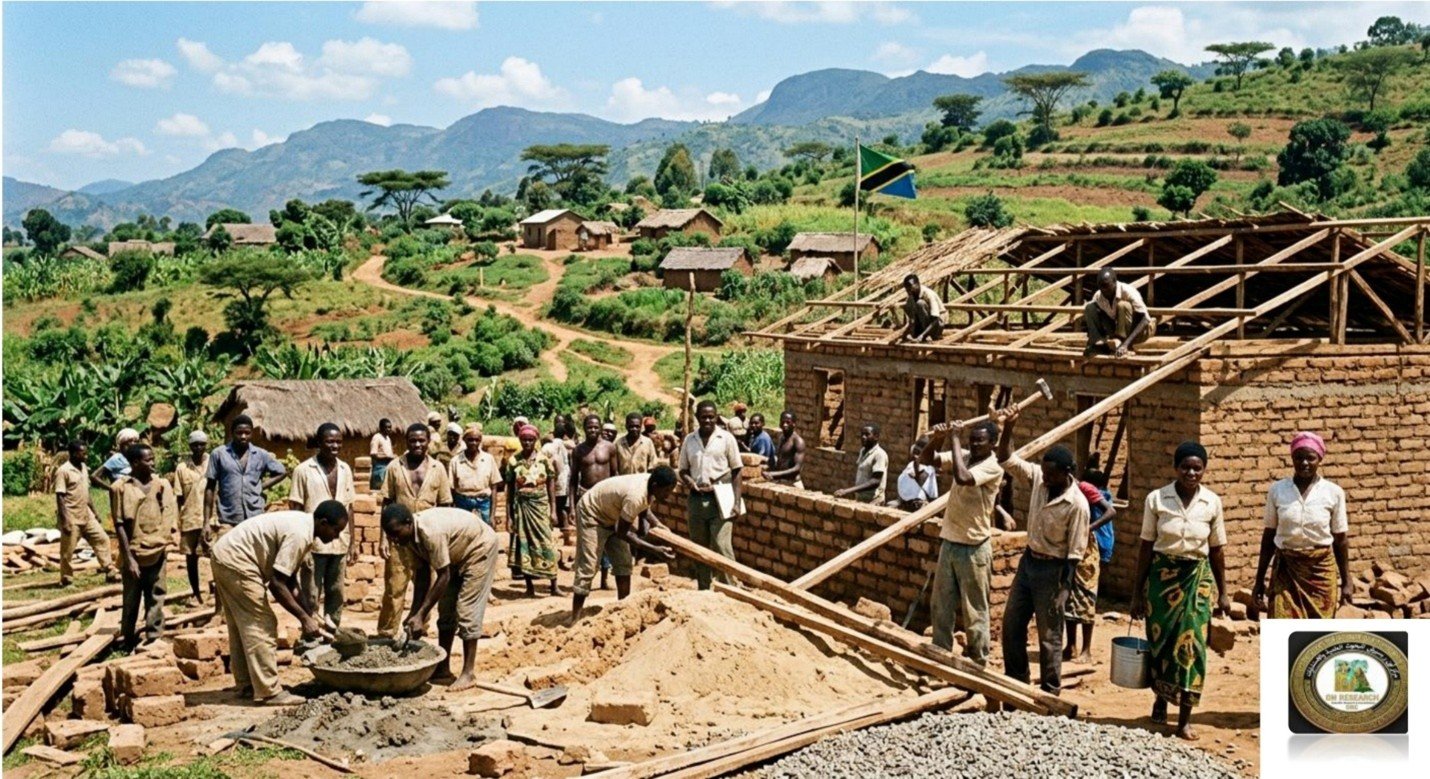
Nation-building efforts continued during the fourth phase (2005–2015) under Jakaya Kikwete through the reorganization of state institutions to meet governance challenges. The principal focus was redefining the role of the state within public–private partnerships and addressing emerging gaps in national unity by reinstating compulsory national service in 2013, after its abolition in 1994, to strengthen youth patriotism. The government also expanded neighborhood-level school construction, thereby redistributing resources more equitably across communities, and revitalized short- and long-term development plans in alignment with Vision 2025.[15]
During the fifth phase (2015–2020) under John Magufuli, the government sought to steer the country toward middle-income status. Policies were adopted to promote industrialization, develop infrastructure supportive of manufacturing, and capitalize on Tanzania’s strategic geographic position and abundant natural resources. New governance measures were introduced to instill fiscal discipline, combat corruption, uphold the rule of law, enhance accountability, and pursue development strategies aimed at inclusive growth.[16]
Third: Outcomes and Impacts of Post-Independence Policies A strong emphasis on national unity, economic reform, and social improvement characterized Tanzania’s post-independence nation-building efforts. In the early years following independence, Tanzania achieved a relatively high level of political stability compared to many other African states. According to World Bank data, literacy rates increased from approximately 17% in 1961 to over 77% by 2015. Additionally, GDP growth averaged 5–7% annually between 2000 and 2015, reflecting the impact of economic reforms[17].One of the earliest successes of national unity policies was the reduction of tribal conflict and ethnic violence, as the first-phase government launched extensive campaigns to promote a shared Tanzanian identity. Swahili, as a national medium of communication, also helped overcome linguistic barriers among tribes, contributing to greater political stability than that experienced by many African countries affected by ethnic conflict. Moreover, the expansion of universal basic education increased literacy rates, enhancing workforce skills and strengthening national awareness.
The implementation of the socialist ideology of Ujamaa improved cooperation among local communities in certain areas; however, despite progress in some sectors, the country continues to face both short- and long-term economic challenges, such as poverty and unemployment. These difficulties stem partly from early policy failures, including the forced relocation of farmers into collective villages, which negatively affected agricultural productivity, as well as limited economic diversification[18].With the adoption of multiparty politics in the second phase, the government also enforced restrictions against forming political parties on ethnic or racial bases, thereby reinforcing national identity and unifying political forces under a common national framework, which contributed to relative political stability.
Over the long term, identity-building policies fostered a political culture grounded in peace and coexistence. Tanzania is among the few African countries that have not experienced major civil wars or large-scale ethnic conflicts, reflecting sustained efforts toward national cohesion. Although socialist economic policies were unsuccessful in some respects, they laid the foundations for future growth through resource nationalization and infrastructure development. With the transition toward a market-oriented economy in the 1980s, Tanzania benefited from economic reforms that stimulated investment and growth. Nevertheless, the weakness of the agricultural sector due to climate variability, traditional production methods, and heavy reliance on mining for exports exposes the Tanzanian economy to price shocks. Consequently, poverty and unemployment remain persistent challenges.[19]
Politically, Tanzania still faces a limited culture of competitive pluralism. Despite the formal shift toward multiparty democracy, Chama Cha Mapinduzi (CCM) continues to dominate the political system in the absence of a strong opposition. Yet, despite these constraints, Tanzania’s political history demonstrates a commitment to peaceful transfers of power through regular elections, elite circulation within constitutionally limited terms, and the alternation of Muslim and Christian presidents and vice presidents, which has contributed to political balance and stability.[20]
Conclusion
Tanzania’s post-colonial nation-building experience represents a distinctive case marked by both challenges and achievements. Despite the economic constraints and identity complexities inherited from colonial administrative, economic, and social policies, the country succeeded in constructing a sovereign nation-state characterized by a considerable degree of self-reliance and a unified national identity. Tribal and social divisions were mitigated through reform-oriented policies adopted across Tanzania’s five successive governments, beginning with the country’s founding leader, Mwalimu Julius Nyerere. Initially, the socialist ideology of Ujamaa was embraced to integrate social, economic, and political objectives and to cultivate a unified national political culture. Swahili was institutionalized as a common national language, while political pluralism was later introduced during the second phase to enhance stability and address the socio-economic shortcomings of earlier socialist policies. Building on these foundations, successive governments continued to implement political, social, and economic measures aimed at deepening national integration and advancing the nation-state through improvements in education, support for economic sectors, and investment in infrastructure.
“Diversity is not inherently dangerous; rather, it resembles a multicolored rainbow whose hues coexist without conflict.”[21]
Linguistic and ethnic pluralism becomes burdensome only when manipulated for political gain and subsequently transformed into a pathway to confrontation. The Tanzanian experience demonstrates that it is indeed possible to construct a nation-state and a sense of national belonging capable of interpreting cultural diversity as a foundation for social tolerance and multicultural coexistence rather than as a source of division. However, some policy recommendations can be offered that could strengthen nation-building in Tanzania, such as strengthening economic diversification beyond agriculture and mining, enhancing political pluralism and opposition participation, investing in climate-resilient agriculture, and expanding inclusive education and digital transformation.
References:
1st Books:
- Aminzade Ronald, Race, Nation, and Citizenship in Postcolonial Africa: The Case of Tanzania, (Cambridge, Cambridge University Press, 2013). Available at: https://shorter.me/uJAf8
- Benedict Anderson, Imagined Communities: Reflections on the Origin and Spread of Nationalism, (London, Verso, 2006, 2nd edition). Available at: https://shorter.me/gsItn
- Hino Hiroyuki, Langer Arnim, Lonsdale John, and others (eds.), From Divided Parts to Cohesive Futures: Reflections on Africa, (Cambridge, Cambridge University Press, 2019). Available at: https://shorter.me/u0Yov
- Skalnik (ed.), Ernest Gellner’s Legacy and Social Theory Today, (London, Palgrave Macmillan, 2007). Available at: https://shorter.me/prbxs
- Wright Sue, Language Policy and Language Planning, (London, Palgrave Macmillan, 2016). Available at: https://shorter.me/S9Z0c
2nd Journals:
- Hafeza Taleb Abdelrahman, Tanzania as a model for social integration in Africa: Strategies and challenges, Sub-Saharan Research Centre, No.35, 2018. Available at: https://shorter.me/uK3UO
- Kapinga Osmund & Ambieza Gores Victoria, The Post-Colonial Administrative System in Tanzania 1961 to 2019, ESA Journal of Humanities and Cultural Studies, Vol.2, No.5, 2020. Available at: https://shorter.me/snLGY
- Pius Mmassy Thadeus, Mitumba Ombeni Joram, O. Nyello Adella and others, Colonial Origins of Postcolonial Authoritarianism in Tanzania: The Reflection on Democracy, Journal of African Politics, Vol.2, No.1,2, 2022. Available at: https://shorter.me/rXYxP
3rd Data:
9.World Bank Data (Tanzania indicators), https://data.worldbank.org/country/tanzania
[1] Sue Wright, Nation Building in the Wake of Colonialism: Old Concepts in New Settings, in: Sue Wright (ed.), Language Policy and Language Planning, (London, Palgrave Macmillan, 2016), P.79. Available at: https://shorter.me/S9Z0c
[2] Benedict Anderson, Imagined Communities: Reflections on the Origin and Spread of Nationalism, (London, Verso, 2006, 2nd edition). Available at: https://shorter.me/gsItn
[3] Daniele Conversi, Gellner in the Anthropocene: Modernity, Nationalism and Climate Change, in: Peter Skalnik (ed.), Ernest Gellner’s Legacy and Social Theory Today, (London, Palgrave Macmillan, 2007). Available at: https://shorter.me/prbxs
[4] Ibid, P.85
[5] Thadeus Pius Mmassy, Joram Mitumba Ombeni, Adella O.Nyello and others, Colonial Origins of Postcolonial Authoritarianism in Tanzania: The Reflection on Democracy, Journal of African Politics, Vol.2, No.1,2, 2022, PP.100-102. Available at: https://shorter.me/rXYxP
[6] Ibid, PP.102-108.
[7] Sue Wright, opcit, P.85
[8] Thadeus Pius Mmassy, Joram Mitumba Ombeni, Adella O.Nyello and others, opcit, PP.108-109.[
[9] Sue Wright, opcit, P.8.6
[10] Ronald Aminzade, African Socialism: The Challenges of Nation-Building, in: Ronald Aminzade (ed.), Race, Nation, and Citizenship in Postcolonial Africa: The Case of Tanzania, (Cambridge, Cambridge University Press, 2013), P.135, Available at: https://shorter.me/uJAf8
[11] Benno J. Ndulu, Wilfred E. Mbowe, and Emma Hunter, Ethnicity, Citizenry, and Nation-Building in Tanzania, in: Hiroyuki Hino, Arnim Langer, John Lonsdale, and others (eds.), From Divided Parts to Cohesive Futures: Reflections on Africa, (Cambridge, Cambridge University Press, 2019), PP.104-109. Available at: https://shorter.me/u0Yov
[12] Ronald Aminzade, opcit, PP.136-138, 162-166.
[13] Benno J. Ndulu, Wilfred E. Mbowe, and Emma Hunter, opcit, PP.113-114.
[14] Ibid, P.114.
[15]Ibid, PP.114-115.
[16] Benno J. Ndulu, Wilfred E. Mbowe, and Emma Hunter, opcit, PP.117-118.
[17] World Bank Data (Tanzania indicators), https://data.worldbank.org/country/tanzania
[18] Benno J. Ndulu, Wilfred E. Mbowe, and Emma Hunter, opcit, PP.117-118.
[19] Ibid, PP.117-118.
[20] Thadeus Pius Mmassy, Joram Mitumba Ombeni, Adella O.Nyello and others, opcit, P.115.
[21] Benno J. Ndulu, Wilfred E. Mbowe, and Emma Hunter, opcit, P.118.

