
Prepared by
Dr. Refat Amer
Academic and Specialist in International Economics
Kingdom of Sweden
Introduction
Rebuilding Syria is not merely about restoring destroyed infrastructure. It is fundamentally about reconstructing the country’s economic and institutional model. International experience, particularly from Europe, shows that post-conflict societies face a critical choice: either reproduce structural fragility or use recovery as an opportunity for long-term transformation. This article argues for “rebuilding Syria differently” as a framework for sustainable development.
- Moving Beyond Linear Reconstruction
Post-war economies often rely on a linear model of reconstruction: rebuild, consume, import, and generate waste. While this approach delivers short-term results, it deepens dependency and resource depletion.
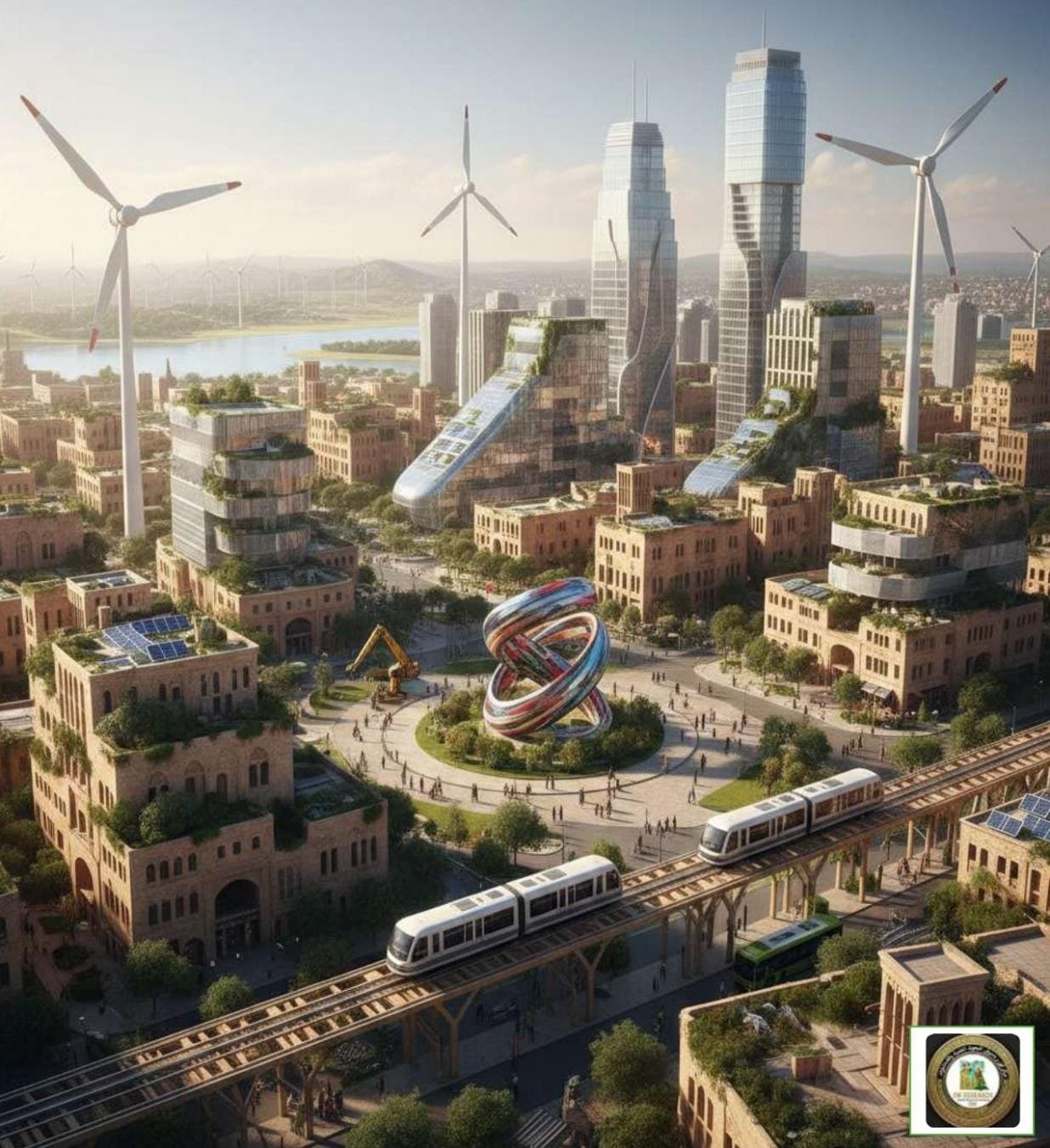
Rebuilding differently requires embedding sustainability from the outset through recyclable materials, energy-efficient urban planning, waste reduction, and linking reconstruction to productive activities rather than speculative real estate.
- Integrating the Green Economy into Recovery
For Syria, a green transition offers strategic advantages. Renewable energy, water efficiency, and sustainable transport can reduce production costs and enhance energy security. However, green policies require institutional capacity and regulatory coherence. Without governance, environmental initiatives remain symbolic.
- The Circular Economy as a Long-Term Framework
A sustainable transition also requires the gradual adoption of circular economy principles: reuse, recycling, repair, and redesign. In Syria’s context, war debris and waste can be transformed into economic resources through recycling industries and repair-based enterprises, reducing import dependency and strengthening domestic production.
- Institutions as the Foundation of Transformation
Comparative experience demonstrates that markets do not function without institutions. Independent courts, regulatory agencies, competition law, and professional public administration are essential. In Syria, institutional weakness remains the primary obstacle to structural change.
- Investment as a Second Phase, Not a Substitute
Overreliance on foreign investment is risky in fragile environments. Development-oriented investment emerges only after state capacity is established. Syria must prioritize productive sectors, prevent monopolistic capture, and link incentives to measurable social and economic outcomes.
- Human Capital at the Core of Development
Sustainable growth depends on education, vocational training, and innovation systems. Rebuilding universities and technical institutions is as vital as rebuilding infrastructure. Without skilled labor, green and circular transitions cannot succeed.
- Social Justice and a Just Transition
Rebuilding differently also requires social inclusion. Economic reforms that marginalize vulnerable groups generate new instability. Social protection, fair housing policies, and community participation are therefore essential components of recovery.
Conclusion
“Rebuilding Syria Differently” means shifting from rapid reconstruction toward structural transformation. Real recovery depends on strong institutions, productive capacity, sustainability, and human development. Without this shift, reconstruction risks reproducing past failures. With it, Syria can lay the foundations for long-term resilience and inclusive growth.


Spinluckybet
Spinluckybet, eh? Sounds like my kind of place! Ready to spin my way to some wins. Wish me luck! Learn more: spinluckybet