إعداد
فريق عمل المركز
وحدة دراسات الإرهاب والجماعات المسلحة
ملخص الدراسة
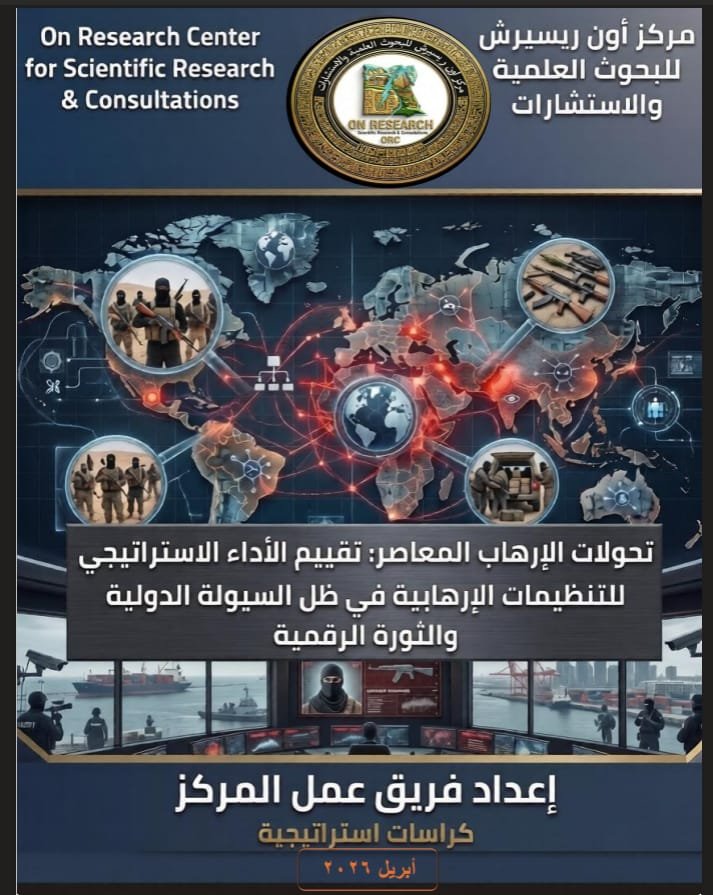
تبحث هذه الدراسة في ديناميكيات التحول الهيكلي والوظيفي للتنظيمات الإرهابية في العقد الحالي، مع التركيز على تقييم كفاءتها في استغلال البيئة الدولية المضطربة. تستخدم الدراسة منهجاً تحليلياً لرصد كيفية انتقال التنظيمات من السيطرة الجغرافية إلى الانتشار الشبكي والافتراضي. وتوصلت النتائج إلى أن انشغال القوى الكبرى بالصراعات الجيوسياسية المباشرة قد أضعف جبهة مكافحة الإرهاب الدولية، مما سمح لهذه التنظيمات بتطوير تكتيكات “هجينة” تدمج بين العنف المسلح والتوظيف التقني المتقدم.
الكلمات المفتاحية : التنظيمات الإرهابية – الصراع الجيوسياسي – التكتيكات الهجينة – السيولة الدولية – الإرهاب السيبراني- التقييم الاستراتيجي.
Abstract
This study explores the dynamics of structural and functional transformation within terrorist organizations over the current decade, focusing on evaluating their efficiency in exploiting the turbulent international environment. The study employs an analytical approach to monitor how these organizations have transitioned from territorial control to networked and virtual proliferation. The findings indicate that the preoccupation of great powers with direct geopolitical conflicts has weakened the international counter-terrorism front, thereby allowing these organizations to develop “hybrid” tactics that integrate armed violence with advanced technical applications.
Keywords
Terrorist Organization- Structural Transformation – Geopolitical Conflict – Hybrid Tactics – International Liquidity – Cyber-Terrorism – Strategic Evaluation .
 اضغط الرابط أسفل pdfلتحميل الكراسة بصيغة ال


