

Translation
Dr. Reem Abu Al-Kheir
Media Professional and Translator Specializing in Iranian and Afghan Affairs
Arab Republic of Egypt
Given the importance of this article and its in-depth analysis of the evolving relations between Cairo and Tehran in light of current regional developments, it has been translated into Arabic to allow Arabic-speaking readers to access Iranian media perspectives on this vital issue.
This is a translation of an analytical article by Masoud Kazemian, an Iranian journalist and political analyst, published on the Jamaran news website under the title “From Cairo to Tehran: A Diplomatic Bridge Amid Strategic Divides,” dated 22/06/1404 H.S. (corresponding to October 27, 2025).
Article Introduction
The establishment of comprehensive and expanded relations between Iran and Egypt has evolved from a mere diplomatic ambition into a strategic necessity. This rapprochement not only serves the national security and economic interests of both countries but could also contribute to building a more stable and multipolar Middle East.
In the world of diplomacy, some events that seem technical or bureaucratic on the surface are, in fact, symbols of a deep strategic shift. The recent nuclear agreement between Iran and the International Atomic Energy Agency, signed in Cairo, Egypt, is a prominent example of this.
This event should not be seen merely as a small step in the complex Iranian nuclear issue but should be analyzed within the historical, cultural, and political context of the evolving Middle East.
Egypt’s hosting of these talks has once again reminded Iran of the country’s importance as a key player in regional equations, making comprehensive relations with it essential for Iran.
Period of Estrangement and Stagnation: The Puzzle of Unjustified Hostility
Historically, Iran and Egypt shared significant civilizational and cultural ties, from religious and cultural connections to royal marriages, such as that of Mohammad Reza Shah Pahlavi to Queen Fawzia. These two countries have long been considered pillars of Middle Eastern civilization. However, the Iranian Revolution in 1979 caused a sudden and deep rupture, transforming a political disagreement into an ideological hostility.
In 1979, Iran fully severed diplomatic relations with Egypt due to Anwar Sadat’s hosting of Mohammad Reza Shah Pahlavi after his departure from Iran. This action was met with strong reactions from Cairo, and with Sadat’s assassination in 1981 by an Islamist group, and Iran’s praise for his killer, the estrangement turned into a deep wound. For years, naming a street in Tehran after “Khaled Islambouli” symbolized this deadlock and obstructed any attempts at normalizing relations. During this period, both countries were deprived of countless opportunities for cooperation in economic, political, and security domains. Attempts to improve relations during the presidencies of Mohammad Khatami and Mahmoud Ahmadinejad failed due to external pressures and internal opposition, resulting in an “unjustified hostility” paid for by both peoples.
Cairo as a Mediation Bridge Amid the Crisis
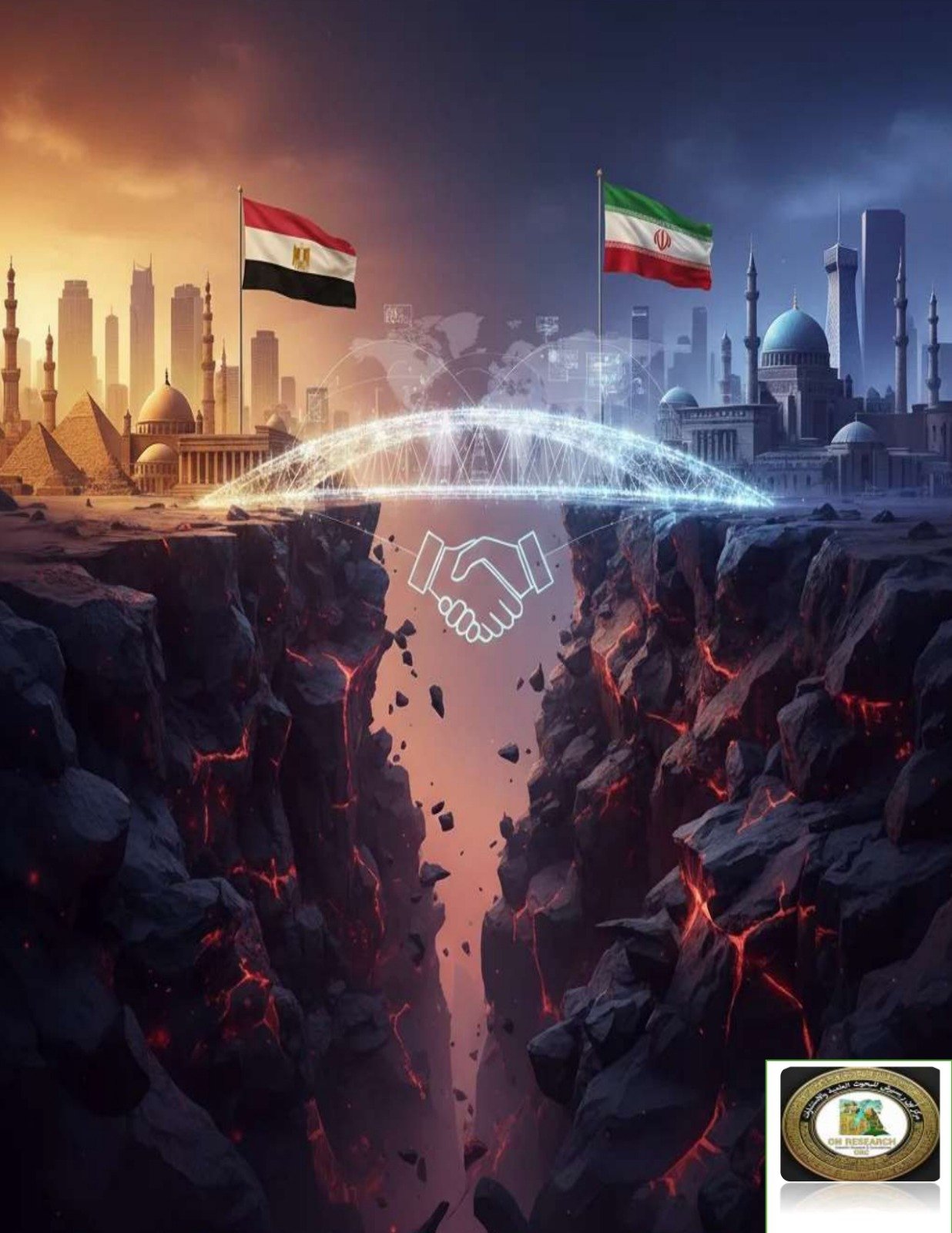
In light of unprecedented regional challenges, such as the war in Gaza, attacks on ships in the Red Sea, and the suspension of nuclear negotiations, Egypt has become a key player and trusted mediator. Hosting the recent nuclear negotiations in Cairo was not coincidental but a strategic choice, reflecting Egypt’s aim to help reduce tensions and prevent a comprehensive regional war by leveraging its influence with both sides (Iran and the West).
This mediating role has become evident in recent months. Multiple phone calls between Iranian and Egyptian officials, and the Iranian president’s meeting with his Egyptian counterpart on the sidelines of the BRICS summit, reflect “active diplomacy.” These steps not only addressed bilateral issues but also extended to coordination on regional crises such as Gaza and the Red Sea. At this stage, Cairo has become an indirect communication channel trusted by Iran, the United States, and even Israel.
Return to Centrality: Reviving Cairo’s Strategic Weight
Recognizing Cairo’s role as an active mediator requires a deeper perspective than seeing it as a neutral party. By hosting these negotiations and taking cautious steps toward rapprochement with Tehran, Egypt is effectively reviving its historical weight and position in the Arab world. For decades, the Middle East experienced a strategic vacuum due to Cairo’s isolation from key regional axes, a vacuum filled by increasing competition among new powers. Now, amid the collapse of old regimes and the emergence of fragile new alliances, Egypt is intelligently—using its diplomatic flexibility—seeking to become a central pole of politics and security in the Arab world once again, thereby increasing its influence over regional developments, from controlling maritime passages in the Red Sea to managing regional crises. This delicate diplomacy is not merely a peaceful display but a strategic maneuver aiming to restore Cairo’s centrality.
Strategic Necessity of Rapprochement with Egypt for Iran
It is clear that establishing comprehensive relations with Egypt is a strategic necessity for Tehran, capable of significantly altering Iran’s position in the region. This necessity can be viewed from several perspectives:
* Reducing Diplomatic Pressure: From the viewpoint of Iranian and Egyptian diplomats, continued severance of relations serves neither country’s interests. Egypt, as the most populous Arab country with unique historical and cultural influence, could serve as Iran’s gateway to the Arab world. Normalizing relations with Cairo could ease diplomatic pressures on Iran and transform Tehran’s regional position from a “besieged actor” to a comprehensive power.
* Creating a New Balance of Power: The Middle East is witnessing the formation of new alliances centered around Gulf countries and Israel. Closer ties between Iran and Egypt could form a “new axis of stability” and create balance in the face of these alliances. Cooperation on crises such as Syria, Yemen, and Sudan, where both countries have shared interests, would further reinforce this axis.
* Economic Gains: For both countries facing serious economic challenges, full relations open countless opportunities in trade, tourism, and mutual investment. Reducing tensions in the Red Sea and increasing revenues from the Suez Canal, vital to Egypt, also depend on cooperation with Iran.
Considerations of Regional and Global Powers: The Challenge to Strategic Will
Nevertheless, it must be acknowledged that the rapprochement between Iran and Egypt faces strong forces seeking to maintain the status quo. For some regional and global powers, any rapprochement between the historical countries of Iran and Egypt is a zero-sum game. While Tehran views these relations as a means to reduce pressure and restore balance, some capitals perceive this approach as a threat that could weaken existing alliances and diminish their influence in the region. Therefore, the process of normalizing relations is not a simple diplomatic act but a rigorous test of the strategic will of both countries, which must find ways to achieve their national interests amid a network of conflicting interests and covert external pressures. Success depends on leaders’ ability to manage developments and build a sustainable framework capable of withstanding these external pressures.
Conclusion: Establishing Relations as a Long-Term Necessity in a Challenging Path
The establishment of expanded and comprehensive relations between Iran and Egypt has shifted from a mere diplomatic ambition to a strategic necessity. This rapprochement not only serves the national security and economic interests of both countries but could contribute to creating a more stable and multipolar Middle East. If the leaders of both countries seize this historic opportunity and prioritize shared interests over disagreements, they can end a long period of mistrust and stagnation and open a new chapter in regional history. This approach has already begun, despite its difficulty and complexity.
Source:
- Masoud Kazemian. Jamaran News Website – Tehran. “From Cairo to Tehran: A Diplomatic Bridge Amid Strategic Divides.” Published 22/06/1404 H.S.; Entry Date 27/10/2025. News Code: 1681820. Link


