
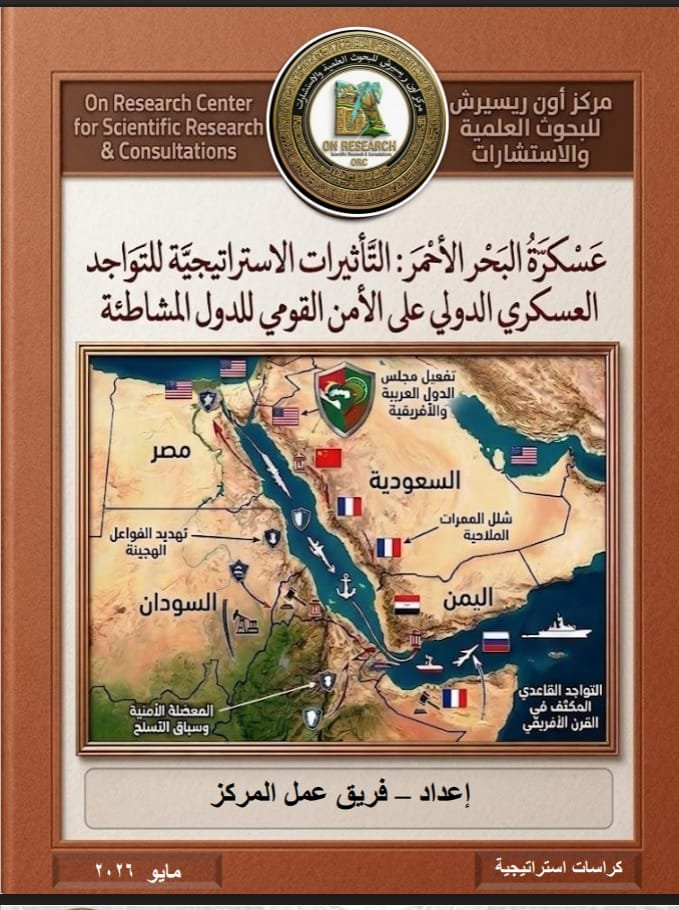
عسكرة البحر الأحمر: التأثيرات الاستراتيجية للتواجد العسكري الدولي على الأمن القومي للدول المشاطئة
إعداد
فريق عمل المركز
ملخص
يشهد البحر الأحمر والقرن الأفريقي تحولات جيواستراتيجية متسارعة، تحول معها من مجرد ممر مائي حيوي للتجارة العالمية وإمدادات الطاقة إلى مسرح للتنافس العسكري والنفوذ الاستراتيجي بين القوى الدولية والإقليمية. تتناول هذه الدراسة ظاهرة “عسكرة البحر الأحمر”، راصدةً خريطة القواعد والتواجد العسكري المكثف لدول مثل الولايات المتحدة، الصين، فرنسا، وروسيا، بالإضافة إلى الانخراط الإقليمي والقوى الفاعلة من دون الدول (مثل جماعة الحوثي). تهدف الدراسة إلى تحليل التأثيرات الاستراتيجية لهذا التواجد على الأمن القومي للدول المشاطئة (العربية والأفريقية)، مع التركيز على التداعيات السياسية، الأمنية، والاقتصادية. وتخلص الدراسة إلى أن هذه العسكرة، وإن كانت تُبرر بحماية حرية الملاحة، إلا أنها تخلق “معضلة أمنية” تهدد استقرار الدول المشاطئة، وتجعل المنطقة عرضة لحروب الوكالة. وتوصي الدراسة بضرورة تفعيل آليات العمل الموحد، مثل مجلس الدول العربية والأفريقية المشاطئة للبحر الأحمر وخليج عدن، لبلورة استراتيجية أمنية ذاتية تقلل من الاعتماد على القوى الخارجية.
كلمات مفتاحية : عسكرة البحر الأحمر – الأمن القومي- الدول المشاطئة – التحولات الجيوسياسية.
Abstract
The Red Sea and the Horn of Africa are undergoing rapid geostrategic transformations, shifting from a vital maritime corridor for global trade and energy supplies into a theater of military competition and strategic influence among global and regional powers. This study examines the phenomenon of the “militarization of the Red Sea,” mapping the dense military presence and bases of countries such as the United States, China, France, and Russia, in addition to regional involvement and non-state actors (e.g., the Houthi group). The study aims to analyze the strategic impacts of this presence on the national security of the littoral states (Arab and African), focusing on political, security, and economic repercussions. The research concludes that this militarization, while often justified by the protection of freedom of navigation, creates a “security dilemma” that threatens the stability of littoral states and exposes the region to proxy wars. The study recommends activating unified institutional mechanisms, such as the Council of Arab and African States Bordering the Red Sea and Gulf of Aden, to formulate an indigenous security strategy that mitigates reliance on external powers.
Keywords: Militarization of the Red Sea – National Security – Littoral States – Geopolitical Transformations.
لتحميل الكراسة الاستراتيجىة اضغط الرابط أسفل 

